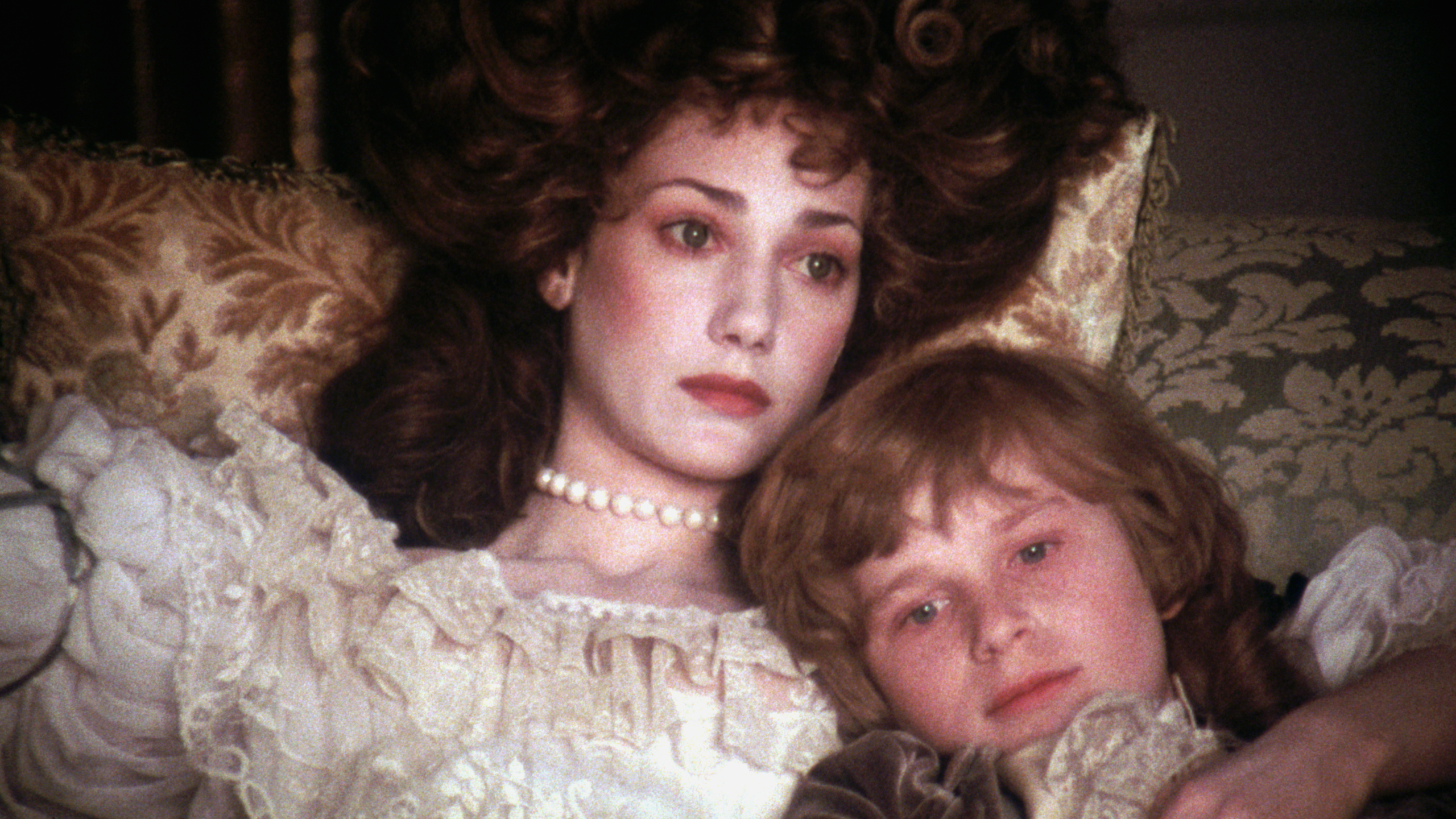
Barry is a handsome young man from modest origins. Rejected by the woman he loves, he embarks on a military career after a duel with his romantic rival. Tired of military life, he devises a ruse to join the Prussian army, becoming the darling of Captain Potzdorf. But once again, fortune turns against him, and forced to flee, he becomes the companion of a refined adventurer. With sword and pistol, he makes his way into high society. By now, he is a fulfilled man. All he lacks is a coat of arms. By marrying the Countess of Lyndon and taking her surname, he fills the gap. But it will be an unhappy marriage. The Countess's son, born from another marriage, hates him and for many years plots revenge, which is accomplished when he faces his stepfather in a duel. Barry Lyndon will lose a leg and all his possessions. A melancholy exile seals his final fate.
4 Academy Awards 1976 (Cinematography, Musical Adaptation, Scenography, Costume Design)
"The late American critic Roger Ebert wrote in 2009, giving Barry Lyndon five stars: “The film has the arrogance of genius. The budget or technical perfectionism doesn't matter. How many directors would have had the same confidence that Kubrick manages to have in taking an almost irrelevant story of a man's rise and fall and creating a work in a style that forces us to change our attitude towards that character? The beauty of Barry Lyndon, the painterly and natural light of many scenes, is not at the service of the story. For this reason it has often been criticized or pointed out superficially. But it is one of the highest levels reached by the gaze of the director of Full Metal Jacket and Eyes Wide Shut. Kubrick, once again and perhaps more decisively, seems to show us the direction: illustrating how the gaze sees the world and History. Barry Lyndon won 4 Oscars: best production design, costumes, musical direction and for best original musical composition (The Chieftains). Shot on film (Eastmancolor – 1.55:1) to be able to film 'by candlelight' Kubrick took out of the drawer three special lenses that he had purchased from NASA a decade earlier, with an aperture f/0.7. Lenses from the German company Zeiss that the space agency had commissioned for the missions to the Moon to photograph the side not illuminated by the sun. According to experts, they are still the brightest lenses ever produced in the entire history of photography. Kubrick used the 35mm f/0.7 and the 50mm f/0.7, mounted on a modified camera to be able to shoot the complicated interior scenes with the dim light of candles. The greatness (not limited only to the technical-photographic aspect) of Kubrick's archaeological/pictorial effort, unfortunately little understood by the distracted and unprepared gaze of spectators in 1975, also lies in this ability to be the archetype of a vision and a story already multimedia. We enter History with the many 'zooms' that bring the gaze inside, through, the frame. Thus its return to the cinema is a new page offered to those who, for reasons of age, missed that opportunity. The ambition of a project that still today In the age of high-definition perception (or 4K and so on), it is a lesson for improvised and forgetful aspiring directors. (Francesco Maggi)


