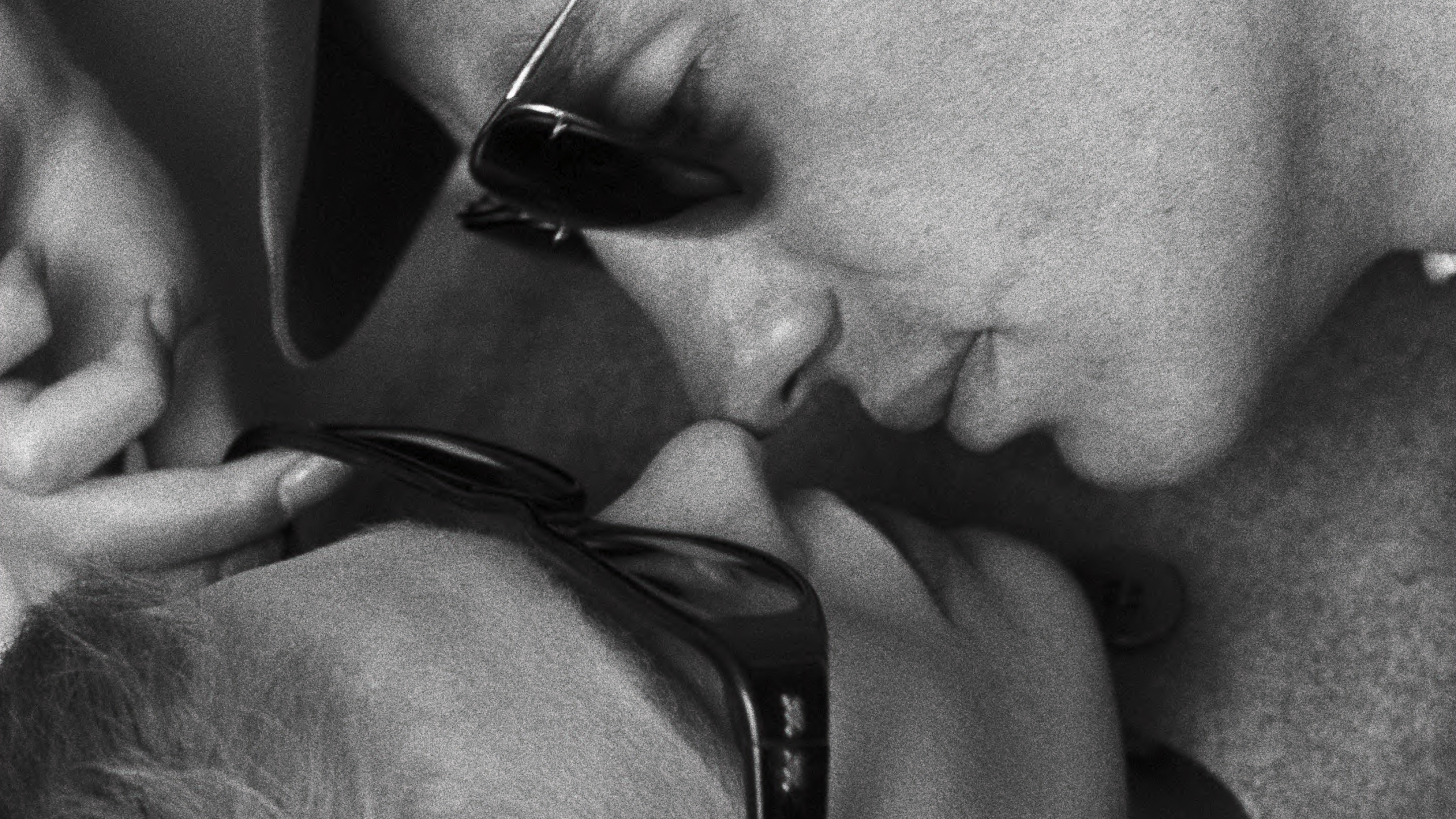
Michel Poiccard steals a car in Marseille and then kills a police officer who was chasing him. He arrives in Paris and reunites with Patricia, an American student he's in love with and with whom he'd like to share his reckless life. Meanwhile, the police are hunting him, and he realizes they're after him after his photo appears in "France Soir." He tries to escape, attempting to take the girl back to Italy. Patricia, however, decides not to follow him and eventually reports him to the police.
The manifesto of the Nouvelle Vague, an immortal film that marked a turning point in the history of cinema.
Best Director at the 1960 Berlin Film Festival.
"There are films in the history of cinema that mark a turning point and remain immortal. Breathless is one of them.Considered the manifesto of the Nouvelle Vague, made a year after The 400 Blows, Hiroshima, my love, and The Sign of the Lion, based on a story by François Truffaut, it brought into play all the cinephile passion of the Cahiers du Cinéma critics who had previously directed (besides Godard, also Truffaut, Rohmer, Chabrol, and Rivette) and their rebellion against rules and tradition. Jean-Paul Belmondo, with his hat on his head, cigarette, and sunglasses, is already an icon, as is Jean Seberg with her white "New York Herald Tribune" T-shirt and copies of the newspaper in her hand. Their image can be immortalized in a film, in a photo, in a painting, told in a book, or even at the center of a song. This is why every viewing of Breathless has the same effect as rewatching a A Picasso exhibition or a Rolling Stones concert where you wait for them to sing "I Can't Get No (Satisfaction)" or "You Can't Always Get What You Want."
The same thing happens with Godard's first feature film. There are lines that become like a song that becomes even more beautiful over the years: "If you don't like the sea, if you don't like the mountains, if you don't like the city..." The love of noir and American crime fiction comes into play in the story, even in the deconstruction of the genre, in the desperate and romantic pursuit of Michel, who, to escape the police, calls himself László Kovács, the same name as the character played by Belmondo in Chabrol's A Double Lock and, prophetically, that of one of the most important cinematographers of New Hollywood.
There's Preminger (the poster for A Woman's Secret, starring Gene Tierney and Richard Conte) and, above all, Bogart with the poster for The Clay Colossus, which is the great American actor's last film and who, in Breathless, is also the ghost who accompanies the protagonist to his death.
Then there's the revolutionary language: Michel and Patricia's glances into the camera, which create narrative suspension and, ideally, aim to draw the viewer into the film with whom they converse; the use of natural light in Raoul Coutard's cinematography; the jump cuts, an irregular editing cut in the central part of the frame; the dialogue between the two main characters in a room that could go on forever.
It was made 66 years ago, it could have been shot yesterday. A dance where direct references come into play, from the girl with the Cahiers du Cinéma to Faulkner's The Wild Palms, to Bach's record and Mozart's music. Director Jean-Pierre Melville appears as the writer Parvulesco, and Godard himself, a sudden Hitchcockian appearance, plays a passerby who recognizes Michel and informs the police. "You can continue to be a film critic even after you become a director. And vice versa. This is why Breathless will forever remain free and revolutionary, with Godard having the same impact as a rock star." (Simone Emiliani)


