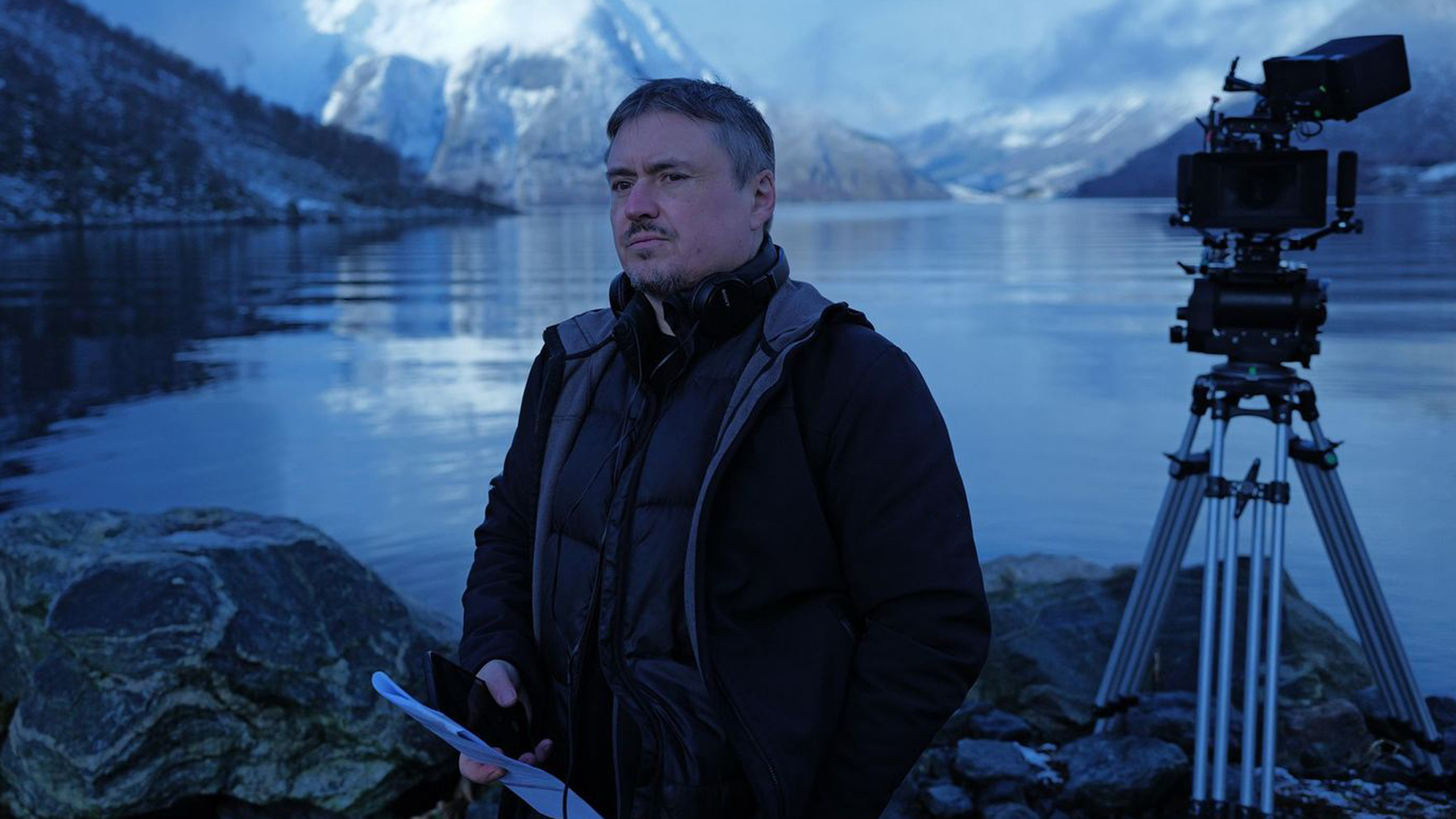
Born in Iași, Romania, on 27 April 1968, Mungiu belongs to what is known as the “post-December generation”: those whose formative years followed the Romanian Revolution of 1989.
After studying English Literature at the University of Iași, he worked for several years as a journalist and teacher. In 1998, he graduated in directing from the Academy of Theatre and Film in Bucharest and began working as an assistant director on films including Radu Mihăileanu’s Train of Life.
He went on to make several short films that immediately revealed his distinctive talent as a filmmaker. In 2002, his debut feature, Occident, won awards at numerous European festivals and screened in the Directors’ Fortnight at Cannes. In 2007, his second feature, 4 Months, 3 Weeks and 2 Days, won the Palme d’Or at the Cannes Film Festival. His third, Beyond the Hills, received the Best Screenplay award at Cannes in 2012, followed four years later by Best Director for Graduation. This year, he reaffirmed his remarkable relationship with the French festival, winning a second Palme d’Or for Fjord—an achievement shared by very few directors.
Cristian Mungiu’s cinema unsettles viewers and challenges their assumptions, sowing doubt, offering different perspectives and dismantling certainties. His characters are drawn with exceptional psychological insight: taking sides is rarely straightforward, and even when our conscience clearly points us in one direction, we often find ourselves torn. Few filmmakers have explored with such depth what it means to be European amid the social and political transformations of recent decades, the upheavals of globalisation and the tensions between tradition and progress, faith and reason. He is undoubtedly one of the most powerful voices in contemporary cinema. The release of his new film, Fjord, offered an opportunity to dedicate a retrospective to his work, and we seized it.