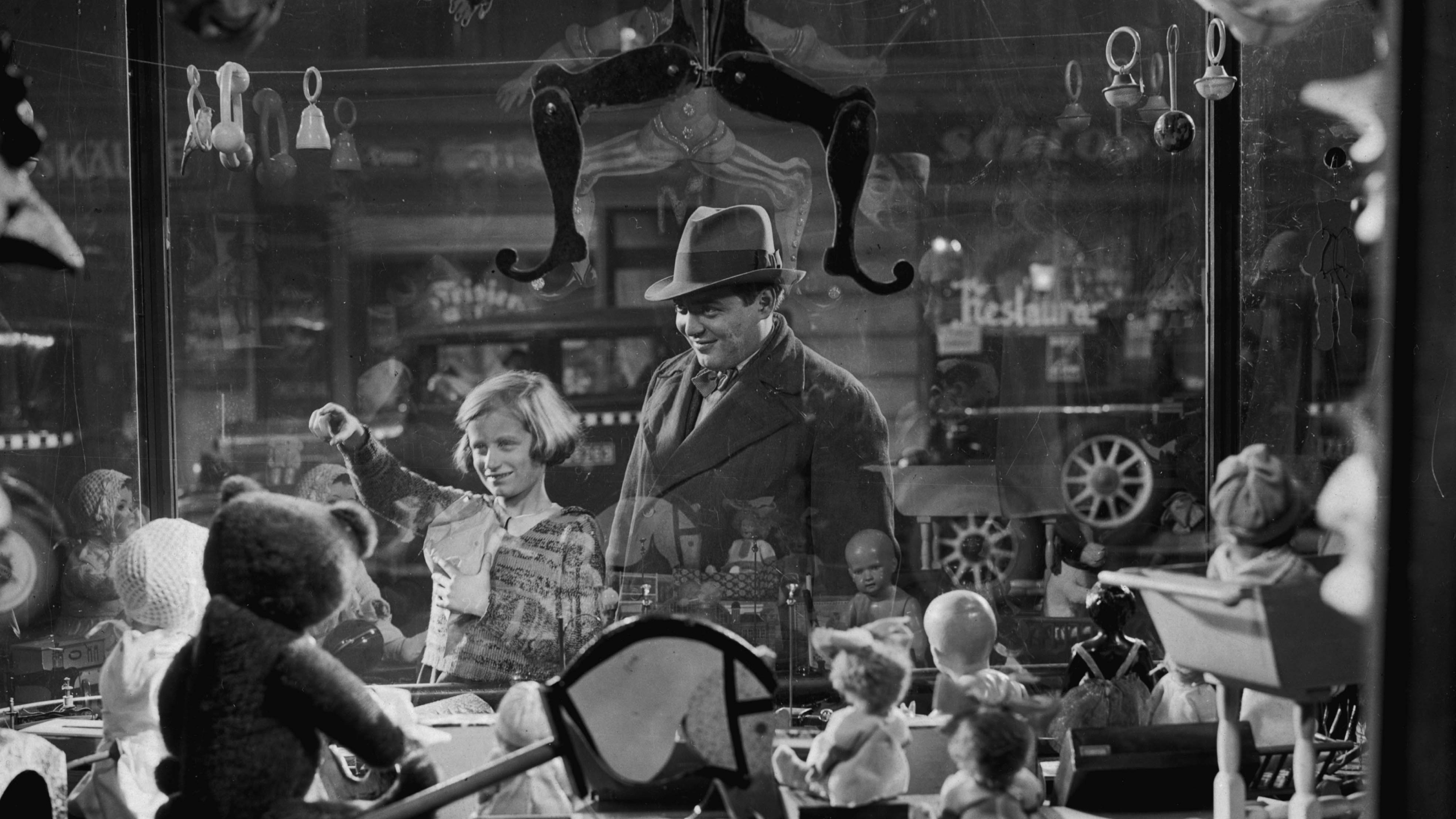
The masterpiece created by Fritz Lang in 1931—which immortalized Peter Lorre—is arriving in Italian cinemas: M – The Monster of Düsseldorf, in a version restored by the Deutsche Kinemathek at the L’Immagine Ritrovata, Haghefilm, and Henderson laboratories.
An unknown killer rapes and murders numerous young girls without leaving a trace. An extensive search network is organized in the city, involving even beggars and criminals.
“M opens with the voices of children cheerfully reciting a nursery rhyme about a killer who hacks his victims to pieces with a cleaver,” wrote scholar Imogen Sara Smith. “Innocence and terror go hand in hand, establishing a sinister link between the children and Hans Beckert—the compulsive killer of young girls who, with his chubby cheeks, small hands, and eyes swollen with fear, evokes both revulsion and pity. The monster at large tears society apart, revealing its rotten core: the populace, transformed into an enraged mob, falls prey to grotesque hysteria, while the criminal underworld proves even more ruthless and efficient than the law. ‘Who is the killer?’” ...as the posters explicitly demand. Fritz Lang emphasized the film’s roots in real-life events, drawing inspiration from news reports of actual incidents and the ruthless clarity of the *Neue Sachlichkeit* (New Objectivity) art movement. Two years before the Nazis rose to power in Germany—an event that drove both Lang and lead actor Peter Lorre to leave the country—the film views maimed beggars, the mentally ill, and housewives worn down by toil with a detached compassion.
Two-thirds of Lang’s first sound film were shot as a silent movie; the addition of sound introduced innovative elements such as sound bridges, off-screen noises, and a deathly silence that heightens the tension. The opening ten minutes of *M* are constructed with a precision that is at once musical and surgical: high-angle, oblique shots—menacingly counterpointed by ordinary sounds—lead into a disquieting montage (a stairwell, laundry drying in a deserted attic, an empty seat at the dinner table, a balloon snagged on telephone wires) while a mother calls out in vain for her missing daughter. At the time, Lorre was best known for his stage work with Bertolt Brecht, but with *M*—his breakthrough film—the shadow of the child-murderer was destined to haunt him, much as Beckert describes being pursued by his own self, running endlessly through streets surrounded by the ghosts of mothers and children. Beckert’s searing monologue never loses its raw power; it is impossible to escape the accusation hurled in his tormented cry: “Who can know what I am like inside?”


